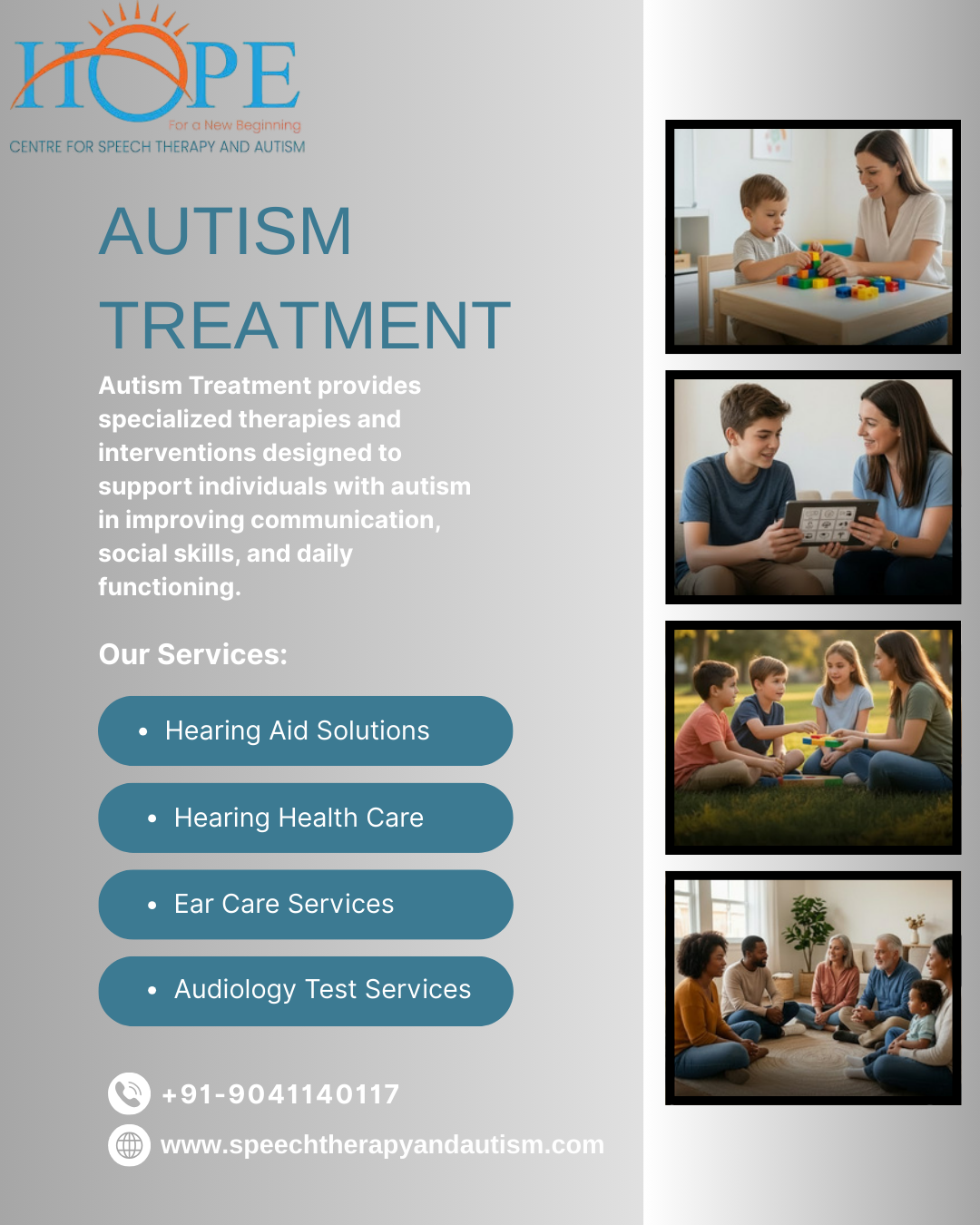
Communication, social interaction, and behavior are all affected by autism spectrum disorder (ASD), but with the right autism treatment, people can make significant progress and improve their overall quality of life. A multidisciplinary treatment plan often includes therapies tailored to each person’s unique strengths and challenges. Research indicates that beginning support early can significantly improve developmental outcomes, making early intervention crucial. One of the most impactful components of autism treatment is speech therapy, which focuses on improving both verbal and non?verbal communication skills. Individuals benefit from speech-language therapy by developing functional communication skills for use in everyday interactions, expanding their vocabulary, and articulating words with greater clarity. It also supports the understanding of social cues, such as maintaining eye contact, taking conversational turns, and interpreting gestures — skills that are essential for building relationships and participating confidently in social settings.
In addition to speech therapy, many treatment plans include Applied Behavior Analysis (ABA), which uses structured techniques to reinforce positive behaviors and teach new skills. Other complementary therapies may include occupational therapy to develop daily living skills, play therapy to enhance social engagement, and sensory integration interventions to help individuals better manage sensory experiences.
Each individual with autism is unique, and a personalised treatment strategy developed by experienced professionals ensures the most effective support. Families and caregivers also play a vital role, working alongside therapists to reinforce skills at home and in community settings. With consistent, evidence?based therapy and compassionate care, individuals with autism can grow in confidence, communication, and independence — leading to a more fulfilling and connected life.